- What is PlasmaPen and How Does it Tighten Skin?
- What Is Microneedling and How Does it Tighten Skin?
- Fibroblast Plasma Treatment vs Microneedling
- What Is Laser and How Does it Tighten Skin?
- Plasma Fibroblast vs CO₂ Laser
- Which Treatment Is Best for Skin Tightening?
- Can You Combine PlasmaPen, Microneedling, and Laser?
- Transform Your Skin with PlasmaPen Revolutionary Technology
As non-surgical aesthetics grow in popularity, choosing the right skin-tightening procedure can feel overwhelming. From plasma fibroblast devices and microneedling rollers or pens to high-powered resurfacing lasers, each technology promises to lift, smooth and rejuvenate ageing tissue.
However, these popular treatments operate through vastly different physical mechanisms, target different depths of the skin, and require varying levels of recovery time. Selecting the right option is not about choosing a single ‘best’ treatment overall but rather matching the correct energy source to your specific anatomical concerns. In this guide, we compare PlasmaPen, microneedling, and CO₂ laser therapy to help you choose the treatment best suited to your skin goals.
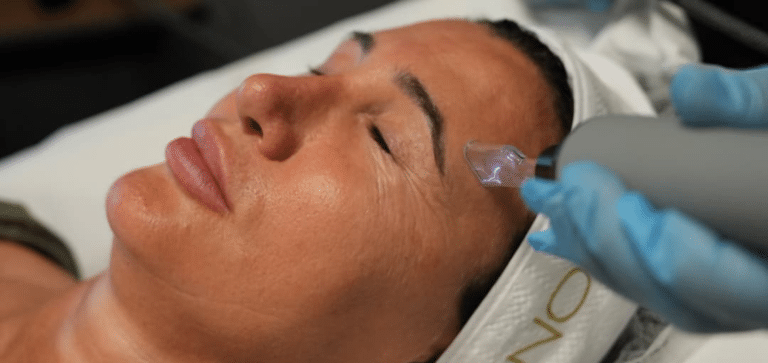
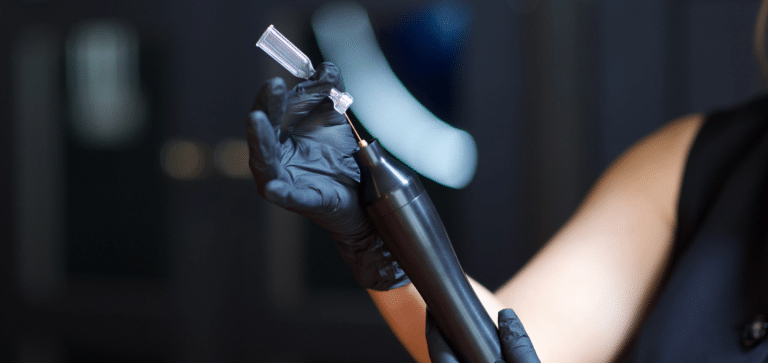
What is PlasmaPen and How Does it Tighten Skin?
PlasmaPen is a non-invasive device engineered for high-precision skin tightening and dermal contraction. The device converts atmospheric nitrogen and oxygen into an ionised gas arc which, when in contact with the epidermis, instantly sublimates (converts solid epidermal tissue directly into gas) tiny micro-dots across a specified grid.
This process causes immediate, visible contraction of the skin tissue without creating lateral thermal damage in surrounding areas. The thermal energy penetrates into the papillary dermis, activating dermal fibroblasts to produce collagen and elastin. To explore the biological science behind plasma energy in detail, read our comprehensive guide, ‘What Is Plasma Fibroblast Therapy?‘
What Is Microneedling and How Does it Tighten Skin?
Microneedling, also known as collagen induction therapy, is a mechanical skin rejuvenation procedure. It uses sterile, ultra-fine needles mounted on a motor-driven cartridge to create thousands of microscopic, controlled punctures across the stratum corneum and upper epidermis.
These mechanical micro-channels trigger the body’s natural wound-healing process, stimulating localised blood flow and releasing platelet-derived growth factors that promote new collagen and elastin as the skin repairs the punctures.
Radiofrequency (RF) microneedling takes this further by delivering thermal RF energy directly through the tips of the needles into the deeper dermal layers to enhance structural tightening.
Fibroblast Plasma Treatment vs Microneedling
- Targeting and Precision: PlasmaPen delivers localised energy delivery. It is specifically designed for targeted skin contraction on delicate zones, such as hooded upper eyelids, under-eye crepiness and perioral smoker’s lines. Microneedling is a broad-stroke treatment swept across larger surface areas, making it better suited for full-face texture enhancement rather than focal skin lifting.
- Tissue Contraction vs Structural Resurfacing: PlasmaPen physically sublimates surface tissue, creating instant skin shortening and structural lifting. Standard microneedling creates micro-channels to stimulate collagen, improving overall skin density, pore size and fine surface lines without physically removing excess skin.
- Treatment Frequency and Longevity: Achieving optimal results with microneedling generally requires a course of 3 to 6 sessions spaced 4 to 6 weeks apart. In contrast, PlasmaPen often achieves significant skin contraction in 1 to 2 sessions, with results persisting for up to 3 years.
What Is Laser and How Does it Tighten Skin?
Laser skin resurfacing uses focused light energy within specific wavelengths to target chromophores (primarily water, haemoglobin or melanin) within skin tissue. In skin-tightening applications, Carbon Dioxide (CO₂) lasers are considered the industry benchmark for ablative light therapy.
Emitting light at a wavelength of 10,600 nanometres, CO₂ lasers are strongly absorbed by the water in skin cells. Fractional CO₂ lasers fire microscopic beams of light that vaporise vertical columns of epidermal and dermal tissue while leaving surrounding tissue untouched. This intense thermal damage causes immediate collagen shrinkage and triggers a robust healing response that strips away damaged surface cells to reveal fresh, tightened skin beneath.
Our internationally recognized Foundation Course covers all the key areas required for all the go-to treatments for skin-lifting, skin-tightening, rejuvenation, resurfacing and regeneration.
Plasma Fibroblast vs CO₂ Laser
- Energy Delivery Mechanism: CO₂ lasers rely on high-intensity light energy absorbed by cellular water across a broad field. PlasmaPen uses gas ionisation independent of skin chromophores, sublimating superficial epidermal cells with zero lateral heat dispersal into adjacent tissue.
- Periorbital Safety: PlasmaPen can safely treat delicate eyelid margins for non-surgical blepharoplasty without risking ocular damage. Operating a CO₂ laser close to the eye requires specialised intraocular metal shields, carries a higher risk of prolonged erythema (redness), and demands extensive clinical recovery.
- Pigmentation Risk and Downtime: CO₂ laser resurfacing involves significant downtime (7 to 14 days of weeping, peeling, and redness) and carries a notable risk of post-inflammatory hyperpigmentation (PIH), particularly on darker Fitzpatrick skin types. Classic warm PlasmaPen involves 5 to 7 days of dry carbon crusting, while non-thermal cold plasma options (such as CoolJet™) allow for cellular stimulation with zero downtime. For more information, read our guide to managing pigmentation risks with plasma treatments.
Which Treatment Is Best for Skin Tightening?
Choosing the ideal treatment comes down to your primary aesthetic concerns, your skin type and how much recovery time you can accommodate.
If you have localised skin laxity, hooded upper eyelids, under-eye bags, deep static smoker’s lines or sagging neck tissue, and you want direct, targeted skin contraction without surgery, general anaesthesia or extensive laser downtime, PlasmaPen is the best option. Clients wanting a full-face complexion refresh, reduced pores, smoother fine lines and overall textural improvement with minimal recovery time should opt for microneedling. CO₂ Laser is best for those wanting full-face, high-intensity deep resurfacing for severe global photoageing, extensive solar damage, deep widespread wrinkles and heavy structural scarring across large surface areas, and who can accommodate 1 to 2 weeks of social downtime.
Can You Combine PlasmaPen, Microneedling, and Laser?
Yes, combining these procedures within a structured treatment plan can deliver comprehensive full-face rejuvenation, provided they are appropriately sequenced.
For example, a client may undergo a course of full-face microneedling to refine overall skin texture, diminish enlarged pores, and improve general collagen density. Once the skin has fully recovered, targeted PlasmaPen sessions can address specific problem areas, such as tightening upper eyelid hooding or lifting stubborn perioral lines, that microneedling cannot fully resolve.
When combining energy-based treatments with lasers or microneedling, always consult a certified practitioner to allow adequate healing intervals (typically 4 to 8 weeks) between procedures to protect the skin barrier.
Transform Your Skin with PlasmaPen Revolutionary Technology
Whether you are looking to offer classic thermal fibroblasting, zero-downtime cold atmospheric plasma, or multi-modality combination treatments, PlasmaPen provides industry-leading equipment built for unmatched safety and results. Explore our innovative flagship devices, including the PlasmaPen, CoolJet™, and the multi-modality Fusion series.
We also offer accredited professional training programmes to master advanced skin-tightening protocols – you’ll gain access to our foundation training upon purchase of one of our devices – and you can read more clinical insights on our official PlasmaPen blog.
Featured in this article
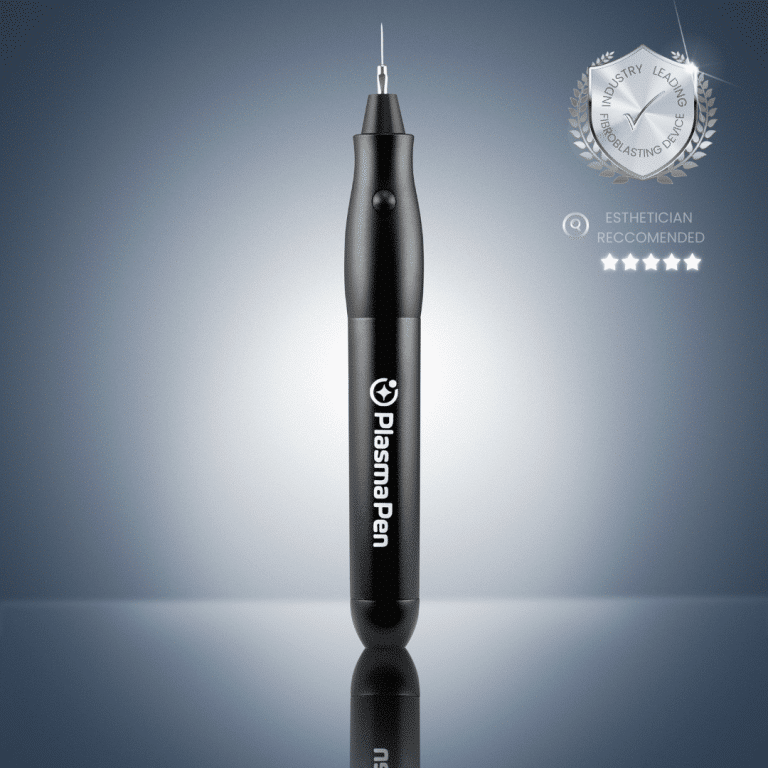
Our stunning PlasmaPen™ Classic device is primarily geared towards beauty, aesthetics and spa professionals and is designed to underpin all the primary treatments.
All our professional plasma devices are designed for non-invasive soft-surgery and fibroblasting treatments to underpin next-generation skin-lifting, skin-tightening, rejuvenation, resurfacing, revitalization, contouring and regeneration treatments.
Pay in 3 interest-free payments with PayPal*