- What is Ozempic Face?
- Why Rapid Weight Loss Shows in the Face First
- Facial fat is structural, not padding
- Skin does not reliably retract
- What clients actually notice
- Volume Loss and Skin Laxity Are Two Different Problems
- How to Avoid Ozempic Face
- Lose weight gradually
- Protect lean tissue with protein and resistance training
- Keep fluid intake up
- Support collagen with SPF and evidence-based actives
- Ozempic Face Treatment Options
- Restoring lost volume
- Tightening loose skin with PlasmaPen
- Skin quality and texture
- Planning Treatment Area by Area
- Building PlasmaPen Treatments for Ozempic Face into Your Clinic
- Frequently Asked Questions
- Does everyone on Ozempic get Ozempic face?
- Can you reverse Ozempic face without surgery?
- When should treatment start after weight loss?
- Do other GLP-1 drugs cause it?
- Treating Ozempic face with PlasmaPen
Ozempic face is the informal name for the facial changes that follow rapid weight loss: hollow cheeks and temples, a softening jawline, deeper folds, and skin that no longer sits tight against the bone beneath it. It is not a side effect of semaglutide and not a clinical diagnosis. It is what fast fat loss looks like on a face, and it happened after bariatric surgery for decades before anyone gave it a name.
What is Ozempic Face?
Ozempic face is a description of symptoms, not a diagnosis. It will not appear in clinical notes, and facial change is not listed among the recognised side effects of semaglutide.
The phrase was coined on social media rather than in a clinic. It spread because a generation of patients began losing weight faster than their faces could adapt.
Why Rapid Weight Loss Shows in the Face First
Facial fat is structural, not padding
The fat in the face sits in discrete compartments that hold the tissue above them in position. Those compartments are thin compared with fat elsewhere on the body, so a modest proportional loss takes a visible amount out.
Deflate the mid-face and the effect cascades. The cheek flattens, the nasolabial fold deepens because the structure supporting it has gone, and tissue that used to sit along the jaw begins to sit just below it. The bone has not changed. Everything attached to it has.
Skin does not reliably retract
Recoil depends on how much collagen and elastin remain, and that reserve declines with age and is further reduced by factors including sun exposure, smoking, and the menopause.
Speed matters as much as quantity. Slow loss gives the dermis time to remodel as the volume beneath it goes; fast loss does not. It is why two clients who have lost the same weight can present very differently.
What clients actually notice
- Flattened or hollow cheeks, so the face reads narrower from the front and shadowed under overhead light
- Hollowing at the temples and under the eyes, where skin is thinnest, and change shows earliest
- Deeper nasolabial folds and marionette lines
- A softer jawline with early jowling
- Crepey texture around the eyes and mouth
Volume Loss and Skin Laxity Are Two Different Problems
Ozempic face is two presentations wearing one name, and they respond to different treatments.
| Volume loss | Skin laxity | |
| What it is | Missing fullness and lost structural support | Loose, crepey tissue with reduced firmness |
| Where it shows | Mid-face, temples, periorbital hollows | Upper eyelids, jawline, neck, perioral lines |
| What it needs | Volume replaced | Tissue tightened |
| Typical route | Fillers, biostimulators, fat grafting | Plasma fibroblasting |
They look similar in a mirror and frequently occur together. Separating them at consultation is the most useful thing a practitioner does in this presentation, because every treatment decision below follows from it.
How to Avoid Ozempic Face
Most prevention sits with the prescriber, not the clinic. What a practitioner can do is brief the client honestly on the four levers that genuinely change the outcome, and be clear that none of them replaces lost fat; they protect the skin that has to cope with losing it.
Lose weight gradually
The NHS advises steady loss of around 0.5 to 1kg a week, which gives skin and soft tissue time to adapt as they shrink. Dose and titration belong to the prescriber. Clients should raise facial changes with them and never alter a treatment plan independently.
Protect lean tissue with protein and resistance training
Rapid loss strips muscle alongside fat, and lost lean tissue contributes to facial structure. Adequate protein preserves it and supplies the raw material for collagen, but protein alone will not hold onto muscle without a reason to keep it.
Keep fluid intake up
Dehydration is common on GLP-1 medication because appetite suppression tends to cut fluid intake along with food, and it exaggerates hollows and shadows.
Support collagen with SPF and evidence-based actives
Daily broad-spectrum SPF does more for skin quality than any serum, because UV degrades the collagen and elastin the client is trying to keep.
Ozempic Face Treatment Options
Restoring lost volume
Dermal fillers replace volume directly and work immediately, though they need maintaining. Biostimulators such as poly-L-lactic acid and polynucleotides prompt the client’s own tissue to rebuild over months instead. Fat grafting moves fat from elsewhere on the body into the face and is the most involved option. Where the problem is genuine hollowing, this is the right category.
Tightening loose skin with PlasmaPen
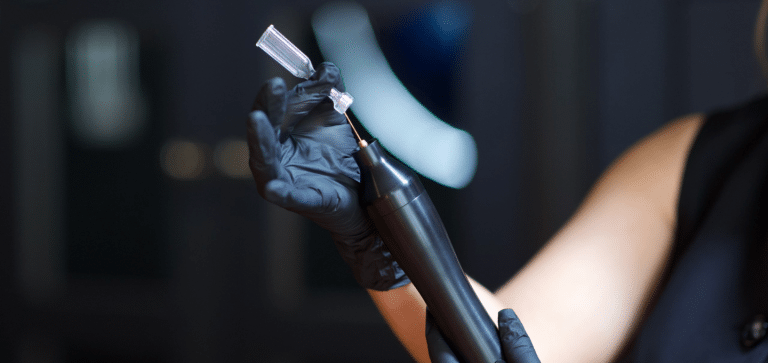
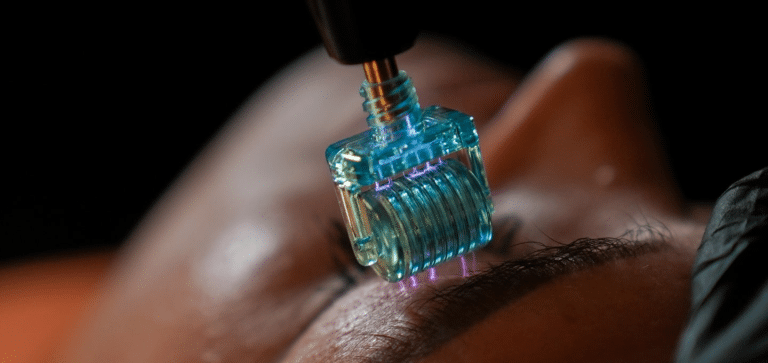
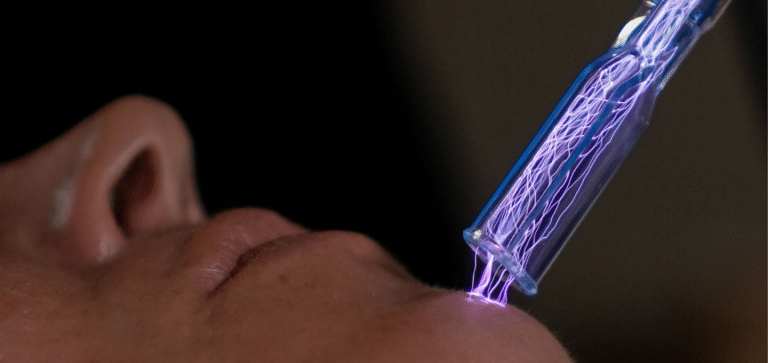
Where the problem is loose or crepey skin rather than missing volume, plasma fibroblasting treats it directly. A PlasmaPen device delivers a controlled arc of plasma energy just above the skin, without touching it, and the tissue contracts as it heals. Depth and intensity are set by the device, the probe, and the practitioner’s technique rather than fixed by the treatment.
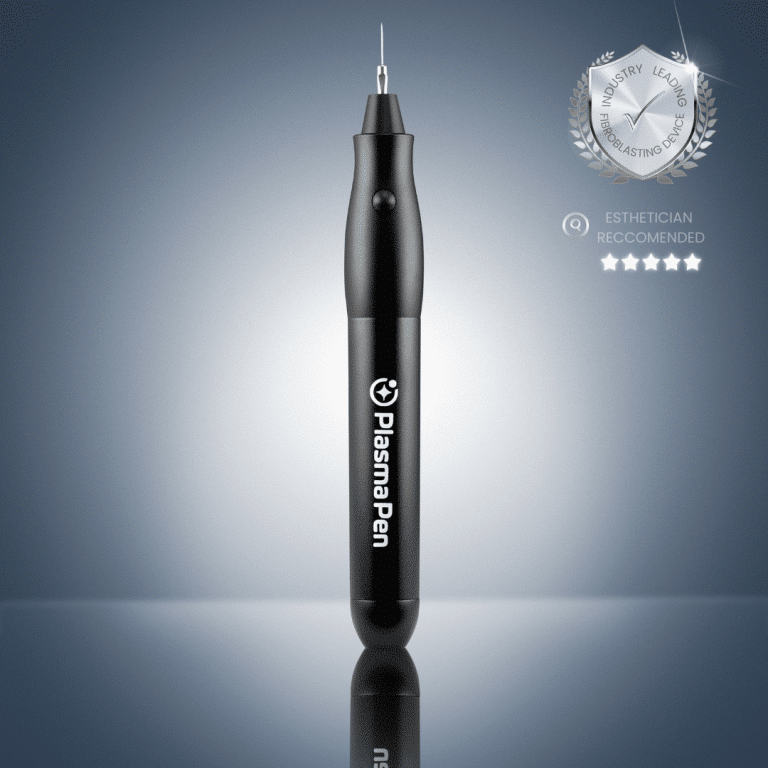
Featured in this article
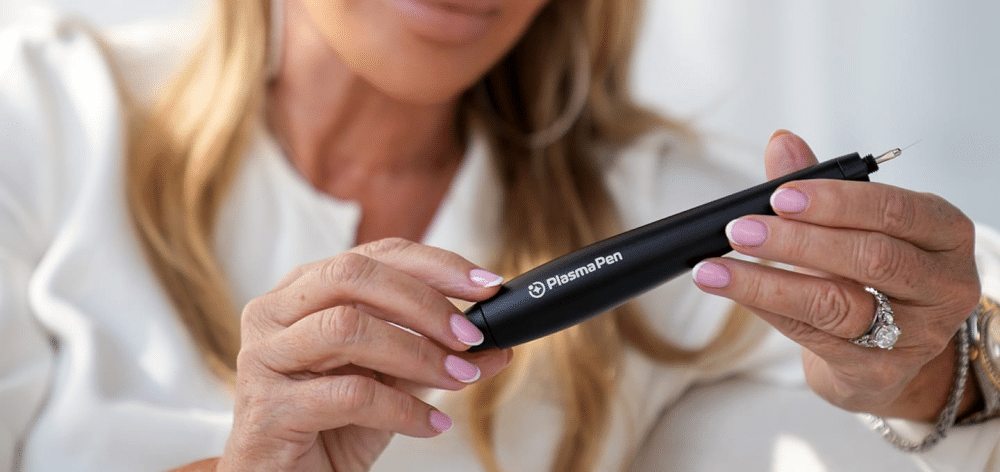
Our stunning PlasmaPen™ Classic device is primarily geared towards beauty, aesthetics and spa professionals and is designed to underpin all the primary treatments.
All our professional plasma devices are designed for non-invasive soft-surgery and fibroblasting treatments to underpin next-generation skin-lifting, skin-tightening, rejuvenation, resurfacing, revitalization, contouring and regeneration treatments.
Pay in 3 interest-free payments with PayPal*
Skin quality and texture
Rapid weight loss changes skin quality as well as skin position. Clients frequently report dryness, dullness, and a thinner-looking surface alongside sagging, and that is a different complaint from laxity. Cold plasma, available on PlasmaPen Fusion and CoolJet, works at near room temperature on tone and texture rather than on laxity, with minimal downtime. It runs alongside a skin tightening plan rather than one, and suits the weeks between tightening sessions.
Planning Treatment Area by Area
Post-weight-loss clients almost always name a single area. What they name is not always what is wrong with it.
| Area | Usually driven by | PlasmaPen suitable? | Planning note |
|---|---|---|---|
| Hooded upper eyelids | Laxity | Yes | Plan around a visible healing week. Often the client’s first and most motivating result |
| Crow’s feet and periorbital skin | Laxity with texture change | Yes | Thin skin; conservative settings and a staged approach |
| Temples | Volume loss | No | Refer or treat with volume. Tightening will not help and may draw attention to the hollow |
| Mid-face and cheeks | Volume loss | Rarely | The area clients most often misattribute to loose skin |
| Nasolabial folds | Loss of support above the fold | Rarely in isolation | Treat the cause higher in the face, not the fold itself |
| Jawline and early jowls | Mixed — descended volume plus laxity | Often, where the presentation is skin-led | Assess carefully; this is where triage most often changes the plan |
| Neck and under-chin | Laxity | Yes | Larger surface area and longer healing. Stage it rather than treating it in one sitting |
| Perioral lines | Laxity with texture change | Yes | Good standalone case with a contained healing period |
Suitability guidance for plasma fibroblasting covers Fitzpatrick types I to III and light IV, as deeper tones carry a higher risk of post-inflammatory pigmentation after controlled injury. Ask why the medication was prescribed: diabetic and insulin-dependent clients heal more slowly, and current PlasmaPen guidance is that they may need longer than 12 weeks between treatments.
Building PlasmaPen Treatments for Ozempic Face into Your Clinic
Post-GLP-1 clients behave differently from most aesthetic enquiries, in ways worth planning for. They arrive with a specific area and a specific photograph rather than a vague dissatisfaction, which shortens consultation. And they rarely have one problem in one place, so a client treated well returns for a second area.
What the clinic needs before taking the work on is a consistent triage script, a referral route for the volume and surgical cases, baseline photography as standard, and a practitioner trained specifically in periorbital and neck work, where most of these cases land and where the margin for error is smallest. Certified training is included with every PlasmaPen device.
Including skin tightening treatment results from our technicians.
Frequently Asked Questions
Does everyone on Ozempic get Ozempic face?
No. It tracks with how much weight is lost rather than with the drug. In a 2026 survey, 13% of people who lost under 10% of their body weight reported decreased facial volume, rising to 50% among those who lost more than 20%. Age, sun damage, and baseline skin elasticity all shift the odds.
Can you reverse Ozempic face without surgery?
Often, depending on which problem is present. Loose or crepey skin responds to tightening treatments including plasma fibroblasting. Lost volume needs replacing rather than tightening, through fillers, biostimulators or fat grafting. Surgery becomes the honest answer only when laxity exceeds what any energy-based device can reach.
When should treatment start after weight loss?
Most practitioners prefer to wait until weight is stable, because treating skin that is still shrinking means aiming at a moving target. There is no fixed waiting period, so timing is a consultation decision rather than a rule.
Do other GLP-1 drugs cause it?
Yes, for the same reason. Wegovy contains semaglutide like Ozempic; Mounjaro contains tirzepatide. None acts on facial tissue directly. Tirzepatide tends to produce greater average weight loss, so the effect is reported more often with it.
Treating Ozempic face with PlasmaPen
Practitioners: post-weight-loss laxity is skin tightening work, and it is reaching clinics faster than most treatment menus have adapted. Compare the device range against the clients you already see, and check the training included with every device.
Considering treatment yourself: PlasmaPen treatments are delivered by trained practitioners rather than sold to the public. Find a technician near you and open the consultation with the volume-versus-laxity question; the answer decides which treatment you actually need.