- What Is an Upper Blepharoplasty?
- Functional vs Cosmetic Eyelid Surgery
- Is It Available on the NHS?
- Who Is a Good Candidate for Upper Eyelid Surgery?
- Excess Eyelid Skin vs a Heavy Brow
- Recovery After Upper Eyelid Surgery
- Risks and Complications
- The Non-Surgical Alternative: Plasma Fibroblast Eyelid Tightening
- How Plasma Sublimation Works
- Who PlasmaPen Suits and Who Should See a Surgeon
- Surgical vs Non-Surgical Upper Eyelid Lift: Side by Side
- Frequently Asked Questions
- Is upper blepharoplasty painful?
- Can I have PlasmaPen treatment if I have already had surgery?
- Can PlasmaPen replace upper blepharoplasty surgery?
- How soon can I wear make-up after a PlasmaPen treatment?
- Considering Your Options
An upper blepharoplasty is a surgical procedure that removes excess skin, and sometimes a strip of muscle or a small amount of fat, from the upper eyelid through an incision hidden in the natural lid crease. It is performed functionally, when drooping skin obstructs the field of vision, or cosmetically, to lift a heavy, hooded lid. This guide covers who it suits and where non-surgical plasma fibroblast tightening fits.
What Is an Upper Blepharoplasty?
An upper blepharoplasty is the surgical removal of excess upper eyelid skin, with muscle or fat removed only where the anatomy calls for it. The scar sits inside the natural fold and is largely hidden once healed.
Ageing creates the need for it. Collagen and elastin degrade, the supporting structures weaken, and the upper lid skin stretches until it folds over the crease. In mild cases the effect is a heavier, more tired-looking eye. In advanced cases, the skin reaches far enough down to sit in the line of sight.
Functional vs Cosmetic Eyelid Surgery
The difference is whether the eyelid is interfering with vision. Functional upper blepharoplasty treats excess skin heavy enough to obstruct the visual field or affect daily activities such as driving and reading. People in this position often compensate without realising it, tilting the head back or raising the eyebrows to hold the lid clear.
Cosmetic upper blepharoplasty treats the same excess skin where vision is unaffected. The aim is appearance: a defined crease, a lighter lid, a more rested look.
Is It Available on the NHS?
Cosmetic upper eyelid surgery is not funded by the NHS. Functional upper blepharoplasty may be, but only where visual impairment can be evidenced, and criteria vary between integrated care boards.
Privately in the UK, the NHS puts the cost of blepharoplasty at £2,000 to £6,000, before consultations or follow-up care.
Who Is a Good Candidate for Upper Eyelid Surgery?
The best candidate has excess upper eyelid skin, is in reasonable general health, and has realistic expectations of what a lid lift changes. Surgery suits:
- Hooded or heavy upper lids obstructing the field of vision
- Loose, folding skin that sits over or beyond the natural crease
- Fat pad herniation producing persistent upper lid fullness
- True ptosis, where the lid margin itself sits low
- Difficulty applying make-up, or lashes turning downward under the weight of the skin
Dry eye, thyroid eye disease, bleeding disorders, anticoagulant medication, previous eyelid surgery, and smoking all affect candidacy, healing, or both. Expectation matters as much as anatomy: a patient who expects surgery to remove crow’s feet or change the shape of the eye will be disappointed by a technically perfect result.
Excess Eyelid Skin vs a Heavy Brow
Not every heavy upper lid is caused by eyelid skin. Brow ptosis is descent of the eyebrow from its normal anatomical position, usually with age and loss of soft tissue support. The dropped brow pushes upper lid tissue downward, creating hooding that looks identical to excess lid skin. The treatment for it is a brow lift, not a blepharoplasty.
A simple check separates the two: the brow is manually lifted to its natural position and the lid reassessed. If the hooding resolves, the brow is the problem. If excess skin remains with the brow supported, a blepharoplasty is indicated. Many patients have both. Missing this distinction is one of the most common reasons an otherwise well-executed eyelid surgery produces an unnatural result.
Recovery After Upper Eyelid Surgery
Most people are socially presentable ten to 14 days after upper blepharoplasty, with sutures out at day five to seven and the final result visible at three to six months.
First 48 hours: Swelling, bruising, and watering peak. Cold compresses and sleeping elevated limit fluid pooling in the lids. No bending, lifting, or strenuous activity. A prescribed ophthalmic ointment is usually applied twice daily.
Week 1: Bruising and swelling begin to settle, and the eyes commonly feel gritty, dry, or tight. Sutures come out at the follow-up appointment, typically day five to seven depending on the closure technique.
Weeks 2 to 4: Most bruising and swelling have resolved, and most people return to work, social activity, and light exercise. The incision line remains pink at close range. Sun protection is advised, since fresh scar tissue pigments easily.
Months 3 to 6: The scar softens, flattens and fades into the crease. Low-grade swelling can persist longer than patients expect. This is when the result should be judged.
Risks and Complications
Upper blepharoplasty is common and generally safe, but it is surgery on the eye area, and complications occur despite careful planning. Recognised risks include:
- Bruising and haematoma
- Bleeding
- Infection
- Asymmetry between the two lids
- Dry eye, or worsening of pre-existing dry eye
- Lagophthalmos, meaning incomplete closure of the eyelid, usually temporary
- Lacrimal gland injury, reducing tear production
- Temporary blurred vision
- Corneal abrasion
- Raised, thickened, or pigmented scarring
- Suture granulomas
- Numbness or altered sensation around the lid
- A hollowed appearance from over-resection of fat
- Rarely, orbital haemorrhage and permanent vision loss
Sudden severe pain with a rapid change in vision is an emergency, which is why patients are given direct contact details before discharge.
The Non-Surgical Alternative: Plasma Fibroblast Eyelid Tightening
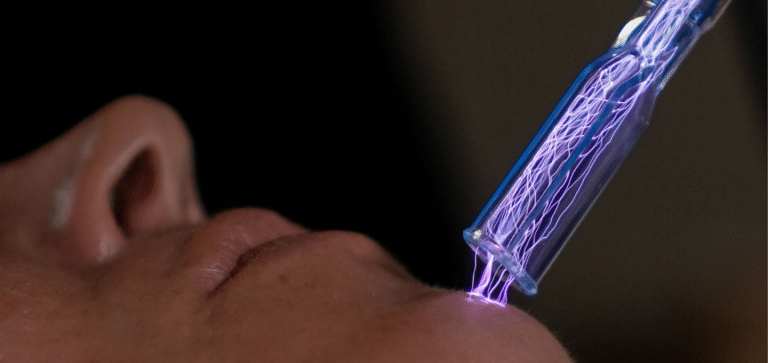
Plasma fibroblast eyelid tightening uses controlled plasma energy to contract loose eyelid skin without cutting or removing tissue. For mild to moderate laxity, it can tighten the lid and delay the point at which surgery is worth considering.
The practical difference is what happens to the tissue. Surgery removes it. Plasma shrinks and remodels what is already there, so the change is subtler and develops over weeks.
Including skin tightening treatment results from our technicians.
How Plasma Sublimation Works
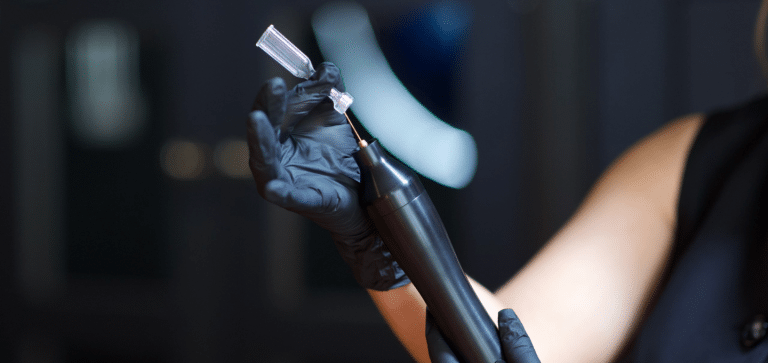
PlasmaPen delivers energy to the skin surface as a fine arc, without touching it. That energy sublimates a precise point of the epidermis, forming a small carbon crust, and the surrounding tissue contracts instantly. The injury is deliberately superficial and controlled. The body’s healing response then drives fibroblast activity and collagen remodelling over the following weeks.
The working rule practitioners use is that if the skin can be pinched, it can be shrunk. If the heaviness comes from herniated fat, a dropped brow, or the lid margin itself, there is nothing for the treatment to contract.
Post-inflammatory hyperpigmentation is the main risk, and it is higher in deeper skin tones and where sun exposure is not avoided during healing. Prolonged redness, poor healing, infection, and scarring are also possible. Treatment should only be carried out by a trained, insured practitioner after full consultation.
Who PlasmaPen Suits and Who Should See a Surgeon
Plasma fibroblast tightening suits mild to moderate upper lid laxity, where the skin is pinchable, vision is unaffected, and the patient understands the result will be a gradual tightening rather than a lift.
See a surgeon instead if there is:
- Significant hooding, with skin folding well past the natural crease
- Fat pad herniation causing persistent lid fullness
- Ptosis, where the lid margin itself sits low
- Any obstruction of the visual field, or compensatory brow raising and head tilting
- Brow ptosis as the underlying cause, which needs a brow lift and will not respond to plasma
Treating these cases with PlasmaPen may produce a disappointed patient and delay appropriate care. Recognising them and referring on is part of doing the treatment well.
Surgical vs Non-Surgical Upper Eyelid Lift: Side by Side
| Consideration | Surgical upper blepharoplasty | Plasma fibroblast tightening |
| What it does | Removes excess skin, muscle or fat where indicated | Contracts and remodels existing skin; removes nothing |
| Who performs it | Oculoplastic or plastic surgeon, GMC registered | Trained, insured plasma practitioner |
| Anaesthesia | Local, with or without sedation; general possible | Topical anaesthetic |
| Procedure time | 45 to 90 minutes | 45 to 60 minutes |
| Visible downtime | 10 to 14 days of swelling and bruising | 5 to 7 days of carbon crusts and swelling |
| Full recovery | Normal activity at 2 to 4 weeks; scar maturation 3 to 6 months | Results develop over 8 to 12 weeks; no scar |
| Typical UK cost | £2,000 to £6,000 | [£300 to £700] per area |
| How long results last | 7 to 15 years; rarely repeated | 1 to 2 years; maintenance usually needed |
| Best suited to | Significant hooding, excess skin or fat, visual obstruction | Mild to moderate, pinchable skin laxity |
| Not suitable for | Anaesthetic allergy or medical contraindications; heaviness caused by brow ptosis alone | Significant hooding, fat pad herniation, ptosis, visual obstruction, brow ptosis |
| Main risks | Bleeding, infection, dry eye, asymmetry, scarring, lagophthalmos, rare vision loss | Post-inflammatory hyperpigmentation, prolonged redness, poor healing, infection, scarring |
Frequently Asked Questions
Is upper blepharoplasty painful?
No. The procedure is performed under local anaesthetic, so you may feel pressure or movement but not pain. Afterwards, the lids feel tight, dry, and swollen rather than sore, and most people manage with paracetamol and cold compresses for the first two days.
Can I have PlasmaPen treatment if I have already had surgery?
Usually yes, once the surgical scar is fully healed and mature, with no dry eye, restricted lid closure, or altered sensation. Your practitioner should confirm how long ago you were operated on and, in some cases, seek written clearance from your surgeon.
Can PlasmaPen replace upper blepharoplasty surgery?
In mild/moderate cases of aesthetic concern, PlasmaPen devices can deliver similar results to upper blepharoplasty surgery. However, for severe cases, like those with visual obstruction, fibroblast tightening is not the appropriate course of action.
How soon can I wear make-up after a PlasmaPen treatment?
After a PlasmaPen treatment, wait until every carbon crust has lifted on its own, usually five to seven days. Applying make-up earlier risks infection and pigmentation.
Considering Your Options
Start with the severity of the concern, not the treatment. If the upper lid skin is mildly to moderately lax, pinchable and not affecting your vision, non-surgical PlasmaPen tightening is a reasonable, lower-commitment choice.
Enquire about a PlasmaPen today and learn more about the various treatments it can bring to your clinic, such as plasma scar treatment, skin pigmentation treatment, plasma hair treatment, and more.
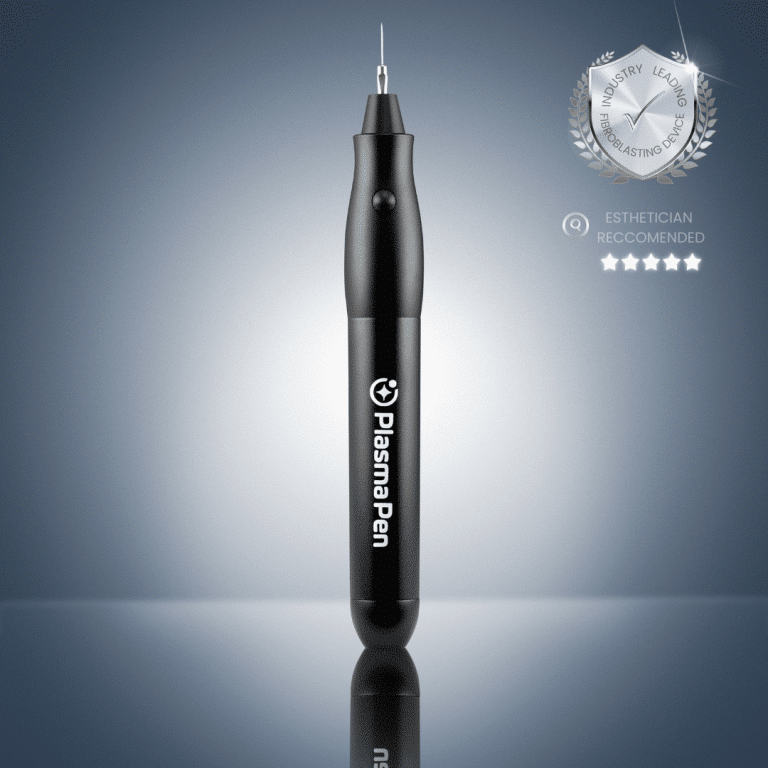
Featured in this article
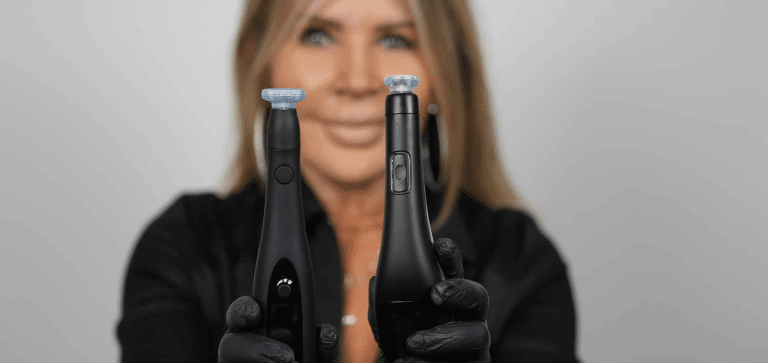
Our stunning PlasmaPen™ Classic device is primarily geared towards beauty, aesthetics and spa professionals and is designed to underpin all the primary treatments.
All our professional plasma devices are designed for non-invasive soft-surgery and fibroblasting treatments to underpin next-generation skin-lifting, skin-tightening, rejuvenation, resurfacing, revitalization, contouring and regeneration treatments.
Pay in 3 interest-free payments with PayPal*