- What is a Glass Skin Facial?
- How Cold Plasma Creates the Glass Skin Effect
- The Benefits of a Cold Plasma Glass Skin Facial
- The PlasmaPen Glass Skin Treatment Step by Step
- Step 1. Consultation and deep cleanse
- Step 2. Exfoliation and resurfacing
- Step 3. The cold plasma pass
- Step 4. Serum infusion and hydration
- Step 5. Protection and finish
- Is a Glass Skin Facial Right for Your Skin?
- Downtime, aftercare and how often to repeat
- Frequently Asked Questions
- How long does a glass skin facial take?
- Does a glass skin facial hurt?
- How many sessions will I need?
- How is a glass skin facial different from plasma fibroblast?
- Which device delivers a glass skin facial?
- Where to Get a Glass Skin Facial With Plasma Pen
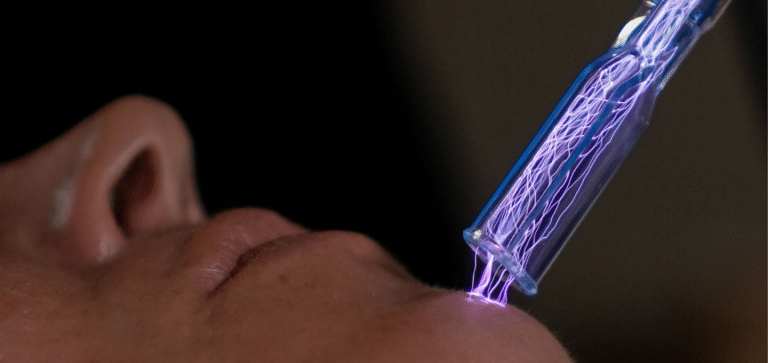
A glass skin facial is a professional in-clinic treatment that leaves the skin luminous, even-toned and smooth enough to reflect light. The term comes from Korean skincare, where glass skin describes a finish rather than a product or a machine. The version delivered with a PlasmaPen device uses cold atmospheric plasma: a partially ionised gas at near room temperature that decontaminates the skin surface, prompts its own repair response, and allows actives to be absorbed rather than left sitting on top.
What is a Glass Skin Facial?
Glass skin describes an outcome, not a branded procedure. That is why the phrase is attached to very different treatments depending on which clinic website you are reading.
In Korean skincare, the finish is built by layering, with lightweight hydrating products applied in sequence over weeks and months until the skin holds water well enough to look reflective. That approach works. It is slow, and it depends entirely on how much of each product the skin absorbs.
A professional glass skin facial compresses the same goal into an appointment. Rather than layering products and hoping they penetrate, the practitioner prepares the skin, treats it with a device that opens the cellular channels, then applies transdermal actives into skin that is ready to take them up. That sequence is the difference between a clinic protocol and a shelf of serums at home, and for a practitioner building a treatment menu it is the part worth explaining to clients rather than assuming.
How Cold Plasma Creates the Glass Skin Effect
Plasma is a partially ionised gas. Cold atmospheric plasma, as used with PlasmaPen’s Cool Jet, operates at near room temperature rather than generating the heat associated with other plasma treatments, which is the reason it behaves so differently on the skin. This is what happens when it meets the surface.
- It decontaminates the skin surface. Surface decontamination is a recognised use of plasma technology well outside aesthetics, which is why the preparation step here goes further than a standard cleanse.
- It improves product penetration, so the serums applied afterwards are taken up rather than sitting on top.
- It supports tissue remodelling and regeneration by encouraging healthy cellular activity.
- It stimulates barrier repair in the superficial layers, leaving skin better protected against external factors.
An active applied to congested, poorly prepared skin does very little; the same serum applied immediately after a cold plasma pass goes where it is meant to go. The reflective look clients associate with glass skin comes from a prepared surface and a well-absorbed active, not from the device alone.
Our internationally recognised CoolJet Cold Plasma Online Course covers all the key areas required for all the go-to treatments.
The Benefits of a Cold Plasma Glass Skin Facial
- Deep hydration, because serums are absorbed into properly prepared skin rather than building on the surface
- Improved skin texture, usually the first change a client notices
- Reduced appearance of pores, as the surface is refined and tightened
- A more even tone, developing across a course rather than after one appointment
- A brightened appearance, following the thorough surface decontamination the treatment involves
- Calmer-looking skin, which practitioners commonly report after the cleansing and preparation stages
Cool Jet treatments specifically improve hydration, brightness, and pore appearance: the first from improved penetration, and the second and third from surface decontamination. Results vary between individuals. Some are visible on the day, others build across several sessions, and it is worth setting that expectation at consultation rather than after the first appointment.
The PlasmaPen Glass Skin Treatment Step by Step
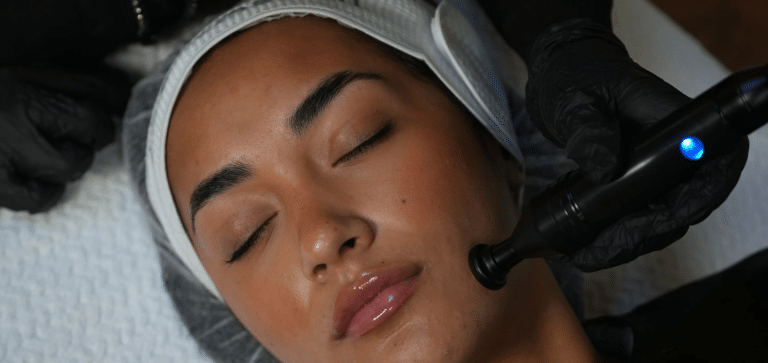
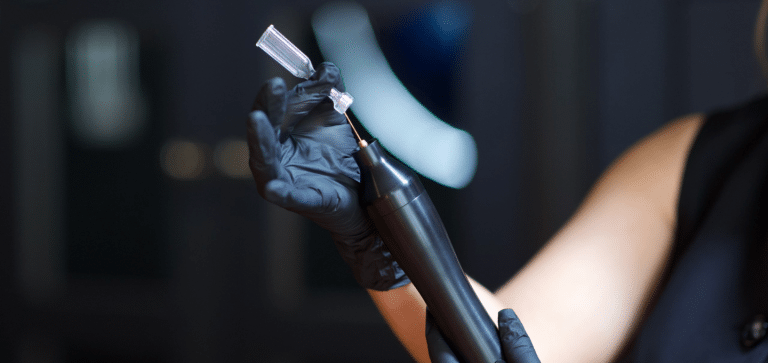
A glass skin facial runs to about an hour, start to finish. The device is the CoolJet, our dedicated cold atmospheric plasma device, and the protocol below is the one taught in manufacturer-led PlasmaPen training.
Step 1. Consultation and deep cleanse
Check medical history, contraindications, and skin type, and carry out a proper skin analysis before anything else. Then cleanse thoroughly: makeup or residue left on the skin will influence the treatment.
Step 2. Exfoliation and resurfacing
A light exfoliation lifts dead surface cells so the PlasmaPen reaches the skin rather than debris. This is done before the treatment, not after.
Step 3. The cold plasma pass
Wipe the skin with an antiseptic swab and dry it. This matters more than it sounds, because surface moisture blocks plasma delivery and is the most common reason a treatment underperforms. Work across the face in linear passes, adjusting intensity and the number of passes to the client’s skin type. The client should feel a comfortable warm sensation and nothing more. No numbing cream is used, because none is needed.
Step 4. Serum infusion and hydration
Choose serums for the client’s primary concern rather than applying a standard set, and use transdermal formulations able to penetrate. They go on while the skin is still in its most receptive state, which is a short window.
Step 5. Protection and finish
Close with cooling and SPF. This is not an optional extra, given how much of the result depends on protecting freshly treated skin. Send the client away with the aftercare printed rather than promised.

Featured in this article
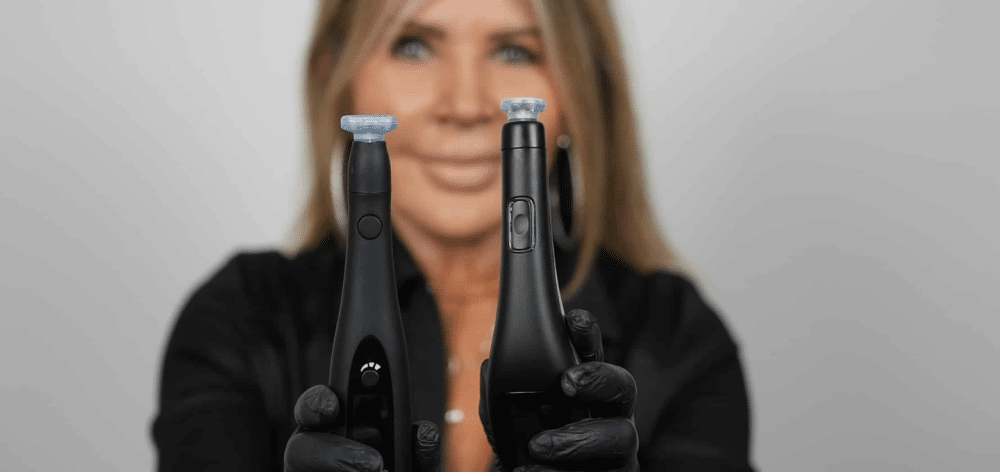
The CoolJet™ is not just another plasma device, this is a true expression of Louise Walsh’s love for art, and life driven by passion. Her revolutionary CoolJet™ Device not only changes the face of the industry but also the faces and souls of individuals around the world.
Pay in 3 interest-free payments with PayPal*
Is a Glass Skin Facial Right for Your Skin?
Cold plasma suits all Fitzpatrick skin types, I to VI. That is a real point of difference from treatments that work by targeting pigment and therefore behave differently on deeper tones. The adjustment is made in the protocol rather than by excluding anyone: higher Fitzpatrick types are treated at a lower intensity with more passes. It applies to cold plasma specifically. The hot plasma used in fibroblast work carries tighter restrictions on deeper skin tones, because it works by controlled injury rather than on the surface.
It is generally used for congestion, uneven texture, dullness, enlarged-looking pores, and skin that is reactive or inflamed and does not tolerate more aggressive treatment. Clients from 12 years old can be treated where clinically appropriate and with consent in place, which makes it one of the few options open to teenage skin.
Some clients cannot be treated, and some need clearance first. Screen against the full list at consultation, but the main ones are worth knowing before booking:
- Not treated: anyone undergoing cancer treatment, chemotherapy, or radiotherapy; uncontrolled high blood pressure; acute illness with a temperature above 38C; active herpes in the area; a pacemaker or metal implants in the area; an implanted electronic device such as a cochlear implant
- Clearance needed first: immune deficiency or an active chronic condition, both of which need the client’s medical specialist to approve treatment
- Pregnancy and breastfeeding: may need clearance as well as consent, and the products used afterwards may not be suitable
Anything not previously assessed should be raised before booking rather than on the day. A good practitioner will decline and explain why. That is competence, not obstruction.
Downtime, aftercare and how often to repeat
There is no crusting and no visible healing period. Most clients return to normal activity immediately, which is why this treatment sits comfortably in a lunch-hour slot where fibroblast work does not.
For the 24 hours after treatment, clients should avoid all six of the following: sun exposure, heat of any kind, exercise, steam, sauna, and make-up. Heat is the one people forget. It includes hot yoga, a Turkish bath and a spa session, and the clock starts when the treatment ends rather than when the day does. Between 24 and 48 hours, keep the routine simple (cleanse, hydrate, SPF) and hold off on acids and retinoids. Beyond that, the standard PlasmaPen aftercare guidance applies, and it should be handed over printed rather than left for the client to find.
Cold plasma is cumulative. A course delivers considerably more than a single session, and the schedule should be built around the client’s skin rather than sold as a fixed package. Where a treatment is being priced, the number to quote is the cost of a course, not a single appointment. Longevity is a maintenance question rather than a fixed result: the client’s skin carries on being their skin.
Frequently Asked Questions
How long does a glass skin facial take?
Allow around an hour, covering consultation, cleansing, exfoliation, the plasma pass, serum application and finishing. The exact time varies with the areas treated and with how much preparation the skin needs on the day.
Does a glass skin facial hurt?
No numbing cream is used because none is needed. Most people describe a comfortable warm sensation during the plasma pass and nothing beyond it, which is one of the practical differences between cold plasma and treatments that create controlled injury.
How many sessions will I need?
Cold plasma works cumulatively, so a course produces considerably more than a single appointment. Immediate cleansing and a tighter look to the pores can show on the day, while tone and texture develop across several sessions.
How is a glass skin facial different from plasma fibroblast?
Plasma fibroblast uses a hot arc to create deliberate micro-injuries that trigger collagen remodelling over about twelve weeks, with visible healing in the first week. Cold plasma works on the skin surface at near room temperature, creates no crusting and requires no recovery period.
Which device delivers a glass skin facial?
The CoolJet, our dedicated cold atmospheric plasma device. It is CE-marked and supplied with manufacturer-led training, because the protocol determines the result as much as the hardware does.
Where to Get a Glass Skin Facial With Plasma Pen
If you are a practitioner, the glass skin facial is a protocol you can add to your treatment menu with the CoolJet, our cold atmospheric plasma device. It is CE marked, used across all Fitzpatrick types, needs no numbing and leaves no downtime, which means it books into short appointments and suits clients who cannot tolerate more aggressive treatment. It comes with manufacturer-led training, and you can see how it sits alongside the rest of the device range before you decide.
If you are looking for the treatment, the device is supplied to trained practitioners rather than sold to the public, so the place to start is to find a trained practitioner near you.