- What is Mounjaro Face?
- Mounjaro Face Changes: What Clients Actually Notice
- Why Mounjaro Face Happens
- Facial fat pads are structural
- Skin does not always retract
- Volume loss and skin laxity are two different problems
- How to Avoid Mounjaro Face
- Control the rate of weight loss
- Protect lean tissue with protein and resistance training
- Hydration and nutrition
- A collagen-supporting skincare and SPF routine
- Treatment Options Once the Changes Have Happened
- Restoring lost volume
- Tightening loose skin with PlasmaPen
- When surgery is the right answer
- How Practitioners Use PlasmaPen Devices to Treat Mounjaro Face
- How plasma soft surgery works
- Which areas it suits after weight loss
- Choosing Across the PlasmaPen Range
- Downtime, sessions and realistic timelines
- Suitability and training
- Frequently Asked Questions
- Is Mounjaro face permanent?
- Does everyone on Mounjaro get it?
- Can you reverse Mounjaro face without fillers?
- How soon after weight loss should treatment start?
- Treating Mounjaro Face With PlasmaPen
Mounjaro face is the informal name for the facial changes that follow rapid weight loss on tirzepatide: flatter cheeks, hollow temples and under-eyes, a softening jawline, and skin that has lost its snap. It is not a side effect of the drug and not a clinical diagnosis. It is what fast fat loss looks like on a face. This guide covers what causes it, what clients can do to limit it, and where PlasmaPen treatment fits for the practitioners treating them.
What is Mounjaro Face?
The phrase was coined on social media, not in a clinic. Before it had a name, this was simply what happened after bariatric surgery, and nobody thought to label it. GLP-1 prescribing has made it common enough, fast enough, to need a word.
For practitioners, the term matters because it is what clients arrive saying. Facial change does not appear on the NHS list of tirzepatide side effects. Correcting that in consultation sets up everything that follows: if the drug is not the cause, stopping it is not the fix.
Mounjaro Face Changes: What Clients Actually Notice
Clients rarely present with a diagnosis. They present with a photograph they dislike. Five changes sit behind it.
- Hollow or flat cheeks: Loss of fullness and contour across the mid-face, so the face reads narrower from the front and shadowed in overhead light.
- Deeper nasolabial folds and marionette lines: The folds from nose to mouth, and mouth to chin, deepen as the support above them drops away.
- A softer jawline and early jowls: Tissue descends below the jaw margin once volume and structural support reduce, blurring a line that was previously clean.
- Hooded or crepey eyelid skin: Periorbital skin is thin and unforgiving, so laxity shows here before anywhere else.
- A gaunt, prematurely aged look: Where several changes land together the face reads tired rather than slimmer, which is usually what prompts the enquiry.
Why Mounjaro Face Happens
Tirzepatide does not act on the face. Rapid fat loss does, and it would do the same if it came from surgery, illness or an extreme diet.
Facial fat pads are structural
Facial fat is not padding. It sits in discrete compartments that hold everything above them in position, closer to scaffolding than upholstery. Deflate the mid-face and the cheek flattens, the fold beneath deepens, and supported tissue drifts downward. Bone structure is unchanged; the soft tissue holding it up is not.
Skin does not always retract
Skin that stretched to cover a larger face does not reliably shrink to fit a smaller one. Recoil depends on the collagen and elastin still present, a reserve already reduced by age, sun exposure, smoking, and menopause. The faster the loss, the less time the tissue has to adapt.
Volume loss and skin laxity are two different problems
Volume loss is missing fullness and lost structural support, and it needs volume restored. Laxity is loose, crepey tissue with reduced firmness, and it needs tightening. They look similar in a mirror and often occur together, but they respond to different treatments. Separating them at consultation is the most useful thing a practitioner does in this presentation, and every treatment decision below follows from it.
How to Avoid Mounjaro Face
Most prevention advice sits with the prescriber. What an aesthetic practitioner can do is work to restore structure and combat laxity once they have happened.
Control the rate of weight loss
The NHS advises steady loss of around 0.5 to 1kg a week, which gives skin and soft tissue time to adapt. Dose and pace belong to the prescriber. Clients should raise facial changes with them and never alter a treatment plan independently.
Protect lean tissue with protein and resistance training
Rapid loss takes muscle alongside fat. Adequate protein and two to three resistance sessions a week preserve lean tissue and supply the raw material for collagen.
Hydration and nutrition
Dehydration exaggerates hollows and shadows, and it is common on GLP-1 medication because appetite suppression cuts fluid intake along with food.
A collagen-supporting skincare and SPF routine
Daily broad-spectrum sun protection matters more than any serum, since UV degrades the collagen and elastin the client is trying to keep. Beyond that, a retinoid and a vitamin C antioxidant carry the best evidence. None of this replaces lost fat; it protects the skin quality that decides how well a face copes with losing it.
Treatment Options Once the Changes Have Happened
Restoring lost volume
Dermal fillers replace volume directly and work immediately. Biostimulators such as polynucleotides prompt the client’s own tissue to rebuild over months. Fat grafting is the most involved of the three.
Tightening loose skin with PlasmaPen
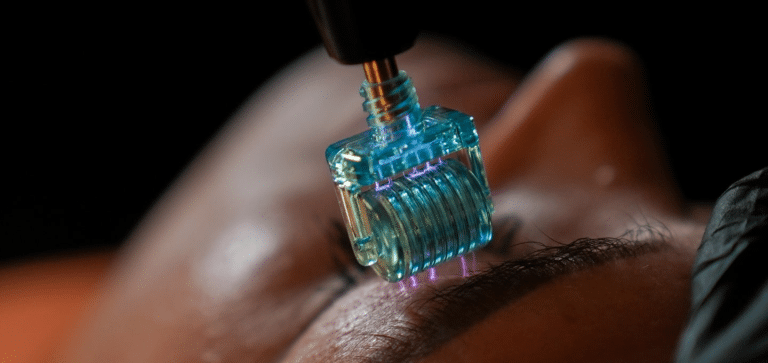
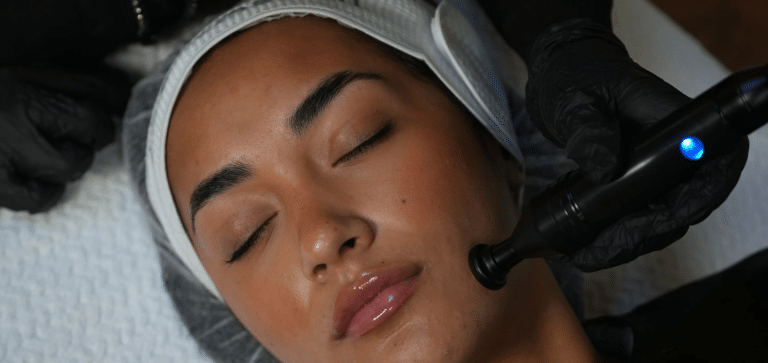
Where the problem is loose or crepey skin rather than missing volume, plasma fibroblasting treats it directly. A controlled arc of plasma energy injures the tissue in a precise, measured pattern, and the skin contracts as it heals.
Including skin tightening treatment results from our technicians.
Depth, downtime, and intensity are set by the device, the probe, and the practitioner’s technique rather than fixed by the treatment, which is why one system covers an upper eyelid and a neck.
When surgery is the right answer
After very large weight loss, laxity can exceed what any energy device reaches. A facelift or neck lift removes tissue; non-surgical treatment can only contract it. Referring those cases protects the result and the clinic’s reputation, and costs less than treating them twice.
How Practitioners Use PlasmaPen Devices to Treat Mounjaro Face
How plasma soft surgery works
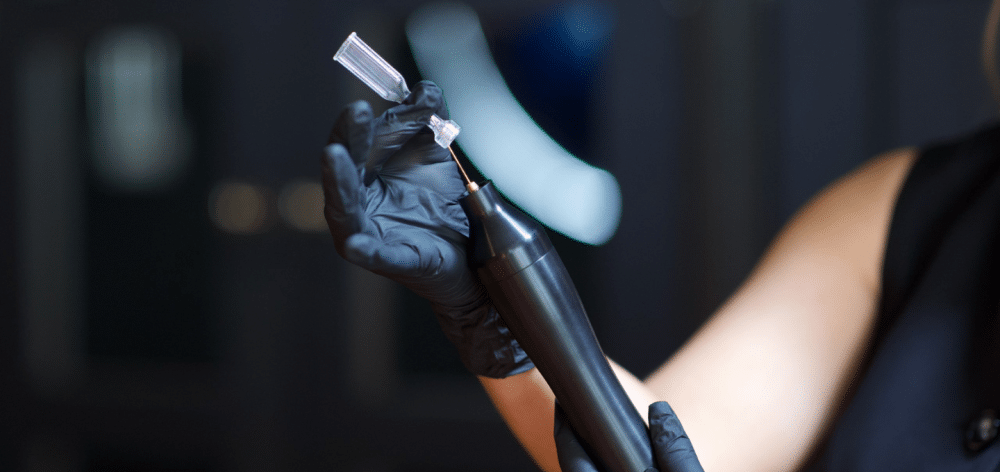
A handheld device delivers a controlled arc of plasma energy just above the skin, without touching it, creating a precise grid of micro-injuries. Two things follow: tissue contracts immediately, visible on the day, and the injury triggers collagen remodelling that builds over the following weeks. Plasma is a partially ionised gas, and it is the energy in that arc rather than heat conducted through the skin that does the work.
Which areas it suits after weight loss
Post-GLP-1 cases concentrate where skin is thin, and laxity shows first: hooded upper eyelids, crow’s feet, the jawline and early jowls, the neck and under-chin, and perioral lines. Clients name these areas unprompted, which makes them straightforward to price and plan as a course.
Choosing Across the PlasmaPen Range
Each PlasmaPen device delivers different results. The table below explains how each can be used to treat Mounjaro face.
| Device | Where it fits in this presentation |
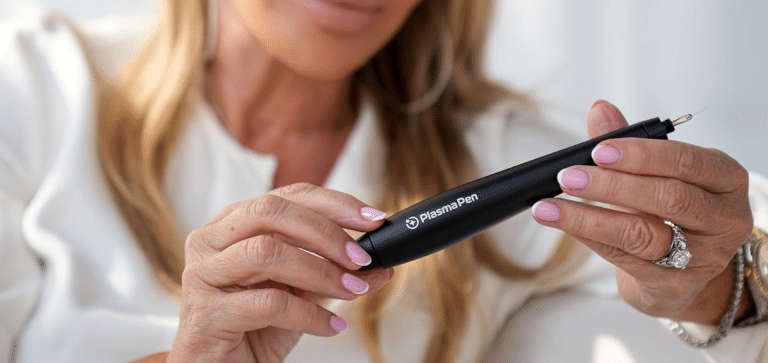
| PlasmaPen | Thermal plasma soft surgery for defined laxity: upper eyelids, perioral lines, jawline. The workhorse for post-weight-loss tightening. |
| Fusion | Multi-modality. Warm and cold plasma plus ozone in one device, so a single client journey can move between tightening and skin-quality work. |
| CoolJet | Cold plasma at near room temperature, with minimal downtime and a wider suitability range. Suits clients who cannot take a visible healing week. |

Featured in this article
Fusion 8 is a revolutionary plasma device engineered for precision, versatility, and safety. Designed to address a wide range of skin concerns, it combines cutting-edge Ozone Plasma and Fusion Argon Plasma Hybrid technology to deliver transformative results with zero risk of PIH—making it safe for all Fitzpatrick skin types.
Pay in 3 interest-free payments with PayPal*
Downtime, sessions and realistic timelines
Expect small brown treatment dots for roughly five to seven days, swelling for two or three, and temporary pinkness once the crusts separate on their own. Brief clients to plan around that week and to read the aftercare guidance before booking.
Collagen remodelling continues well after the skin looks normal, which is why review at six and 12 weeks precedes any decision about further treatment.
Current guidance is that diabetic and insulin-dependent clients may need longer than 12 weeks between treatments, so ask at consultation why the medication was prescribed.
Suitability and training
PlasmaPen guidance for plasma fibroblasting covers Fitzpatrick types I to III and light IV, because deeper tones carry a higher risk of post-inflammatory pigmentation after controlled injury.
Frequently Asked Questions
Is Mounjaro face permanent?
Not necessarily. Skin keeps adapting for months after weight stabilises, and some change softens on its own. What does not return is the facial fat, so hollowing that is still obvious once weight has been stable is unlikely to resolve without treatment.
Does everyone on Mounjaro get it?
No. Some facial change is normal with weight loss, but the pronounced version is not universal. It is more likely with faster loss, a larger total loss, age over 40, thinner baseline facial fat, existing sun damage, and lower skin elasticity.
Can you reverse Mounjaro face without fillers?
Partly, depending on which problem is present. Loose and crepey skin responds to tightening treatments such as PlasmaPen. Volume loss does not, though filler is not the only volume option: biostimulators and fat grafting also restore substance.
How soon after weight loss should treatment start?
Most practitioners prefer to wait until weight is stable, because treating skin that is still shrinking means aiming at a moving target. There is no fixed waiting period, so timing is a consultation decision rather than a rule.
Treating Mounjaro Face With PlasmaPen
If you are a practitioner, post-weight-loss laxity is one of the fastest-growing reasons clients walk into an aesthetic clinic, and it is skin tightening work. Compare the device range against your client base, and check the certified training included with every device.
If you are considering treatment yourself, PlasmaPen treatments are delivered by trained practitioners rather than sold to the public, so start by finding a technician near you, and raise the volume-versus-laxity question at that consultation.