
- What Is a Mole?
- What Moles Can’t Be Treated?
- Can PlasmaPen Remove Moles?
- Is Surgical Removal a Better Option?
- What Happens During a PlasmaPen Mole Removal Treatment?
- Which PlasmaPen Device is Best Suited to Mole Removal?
- PlasmaPen Mole Removal Aftercare
- Discover PlasmaPen’s Revolutionary Devices for Incredible Results
PlasmaPen treatment is sometimes advertised as a way to reduce or remove the visible tissue of a raised mole without conventional surgery. However, a mole is a pigmented skin lesion, and its appearance alone cannot confirm whether it is harmless. Any mole being considered for removal should first be examined by a GP, dermatologist or another appropriately qualified medical professional.
This assessment is important because a suspicious mole may need to be surgically removed and sent to a laboratory for histological examination. Destroying the tissue with a Plasma Pen could prevent that examination and potentially delay a diagnosis.
What Is a Mole?
A mole is a type of skin growth that often appears as a small oval or round coloured spot on the skin. It’s caused by clusters of pigment-forming cells called melanocytes and is typically harmless unless it changes size, shape or colour.
What Moles Can’t Be Treated?
Atypical or changing moles shouldn’t be removed or treated, as they could be a sign of melanoma – a type of skin cancer. Attempting to remove malignant melanoma is dangerous, as it can cause cancerous cells to spread locally or through the bloodstream and destroy the tissue sample needed for a proper lab biopsy. A dermatologist should always examine a mole via dermoscopy or biopsy before any removal takes place.
Most moles are harmless, but melanoma can develop in an existing mole or appear as a new pigmented area. Warning signs can include a change in size, shape, or colour, irregular borders, several colours within one lesion, itching, crusting, or bleeding.
The commonly used ABCDE guide identifies possible warning signs:
- Asymmetry: one half looks different from the other
- Border: the edge is irregular, blurred or uneven
- Colour: the lesion contains different colours or has changed colour.
- Diameter: a larger diameter can require investigation, although melanomas can also be small; and
- Evolving: the lesion is changing in size, shape, colour, sensation or elevation
A lesion that looks different from the person’s other moles should also be checked. The NHS explains that a suspicious mole may be removed by excision biopsy and sent for laboratory testing. This allows a pathologist to determine whether melanoma is present and, if so, how deeply it has grown. Read the NHS information on melanoma assessment.
Can PlasmaPen Remove Moles?
Plasma energy can physically reduce some superficial, raised skin lesions. That does not mean every lesion that looks like a mole is suitable for PlasmaPen treatment.
A PlasmaPen creates a small plasma arc by ionising the air between the tip of the device and the skin. This transfers energy to a very small treatment area and causes controlled thermal damage to superficial tissue. The treated tissue darkens and forms a crust while the skin begins to repair itself.
A practitioner who is not medically qualified must not attempt to diagnose a mole. Medical clearance should be recorded in the client’s treatment notes before any cosmetic procedure is considered. Local regulations, professional scope of practice and the practitioner’s insurance conditions must also permit the treatment.
Is Surgical Removal a Better Option?
The correct removal method depends on the lesion and the reason for removing it. Where melanoma is suspected, medical guidance supports surgical excision so that the tissue can be examined. Cancer Research UK explains that doctors diagnose melanoma by removing the abnormal mole or skin area and sending it to a laboratory.
Even when a mole has been confirmed as benign, a doctor or dermatologist may recommend excision, shave removal or another method based on its depth, location and appearance. Each approach has possible benefits and risks.
A client should be cautious of any provider who recommends treatment without medical assessment, guarantees a scar-free result or describes every mole as suitable for cosmetic removal.
What Happens During a PlasmaPen Mole Removal Treatment?
The precise procedure depends on the device, the practitioner’s professional scope and the protocol authorised by the manufacturer and insurer.
Where treatment is legally and professionally permitted, the process may include:
- Reviewing the medical assessment confirming that the lesion is benign
- Completing a consultation, medical history and contraindication check
- Discussing realistic outcomes and the possibility of scarring or pigmentation changes
- Obtaining informed consent and taking standardised photographs
- Preparing the treatment area
- Applying plasma energy according to the approved protocol
- Providing written aftercare and contact information.
A client should never use a PlasmaPen purchased online to remove a mole at home. Incorrect use can cause burns, infection, scarring and permanent changes in skin pigmentation. It also bypasses the medical assessment needed before destroying a pigmented lesion.
Which PlasmaPen Device is Best Suited to Mole Removal?
PlasmaPen devices can all be used by appropriately trained practitioners for selected, medically confirmed benign lesions when local law, professional scope and insurance permit. The best device choice is based on the practitioner’s experience, expected treatment volume, preferred level of control and wider treatment plans. A higher-powered model does not remove the need for medical clearance, advanced training or conservative settings.
- PlasmaPen Classic: Our standard and most accessible device, the PlasmaPen Classic is suitable for occasional lesion work.
- PlasmaPen Ultra: For regular mole and skin-tag work, the Ultra device has two settings and offers experienced practitioners more treatment speed and flexibility without requiring the full five-setting range.
- PlasmaPen Platinum: Reserved for practitioners requiring a wide range of settings or more varied advanced-treatment services, the PlasmaPen Platinum offers five different power and plasma delivery settings.
In terms of PlasmaPen training, our Foundation training is included with the purchase of any PlasmaPen device, but mole and other lesion-removal procedures require Advanced training. Practitioners planning to offer mole removal should therefore confirm the advanced-training pathway, practical competency requirements and insurance approval before treating clients.
Including real technicians’ results following plasma treatment.
PlasmaPen Mole Removal Aftercare
PlasmaPen mole removal aftercare must follow the written instructions supplied by the treating practitioner. Different devices and treatment protocols may require different care, so generic online advice should not replace the instructions provided following treatment.
The PlasmaPen mole removal healing process usually takes up to 2 weeks for complete skin maturation. For the first seven days, the skin may swell and redden as it heals and the scabs fall off. From week two onwards, new pink skin will appear where the mole was until it fades and blends back into your natural skin tone.
Following a plasma therapy treatment, common precautions may include:
- Keeping the area clean according to the practitioner’s instructions
- Avoiding touching, scratching or picking the crust
- Not applying unapproved skincare or makeup to the area; PlasmaPen’s recommended aftercare is our Advanced Repair Healing Serum
- Avoiding swimming, saunas and activities that expose the healing area to contamination
- Limiting excessive heat and sweating during the early healing period
- Allowing the crust to separate naturally
- Protecting the healed area from ultraviolet exposure as advised.
- Do not pull off the crust, even if it appears loose. Premature removal may increase the risk of infection, scarring and pigmentation changes.
The practitioner should explain when the client can resume cleansing, makeup, active skincare and normal exercise. The client should also receive clear instructions about when to contact the clinic. For more detailed post-treatment instructions, read our guide to PlasmaPen Treatment Aftercare.
Discover PlasmaPen’s Revolutionary Devices for Incredible Results
PlasmaPen manufactures cosmetic devices using revolutionary technology to help experienced professionals provide their clients with amazing results. Our devices, including the PlasmaPen, CoolJet and Fusion, offer a minimally invasive and non-surgical solution for a range of cosmetic concerns and skin conditions.
Practitioners can browse our products, including pre-treatment products and our aftercare range, or our professional training, while clients can explore our Technician Directory to find qualified practitioners. For any further information about PlasmaPen, please contact us.
Featured in this article
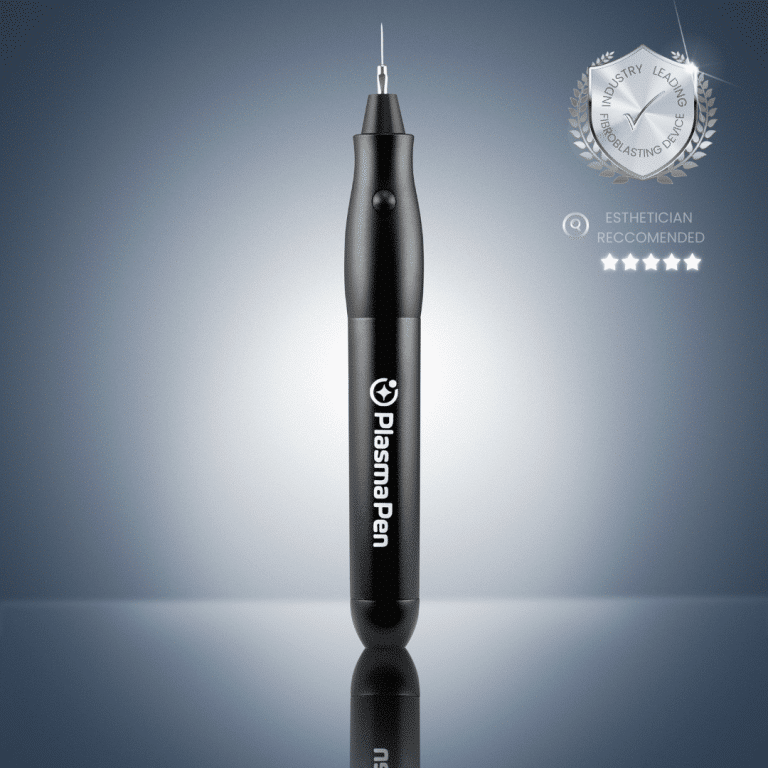
Our stunning PlasmaPen™ Classic device is primarily geared towards beauty, aesthetics and spa professionals and is designed to underpin all the primary treatments.
All our professional plasma devices are designed for non-invasive soft-surgery and fibroblasting treatments to underpin next-generation skin-lifting, skin-tightening, rejuvenation, resurfacing, revitalization, contouring and regeneration treatments.
Pay in 3 interest-free payments with PayPal*